
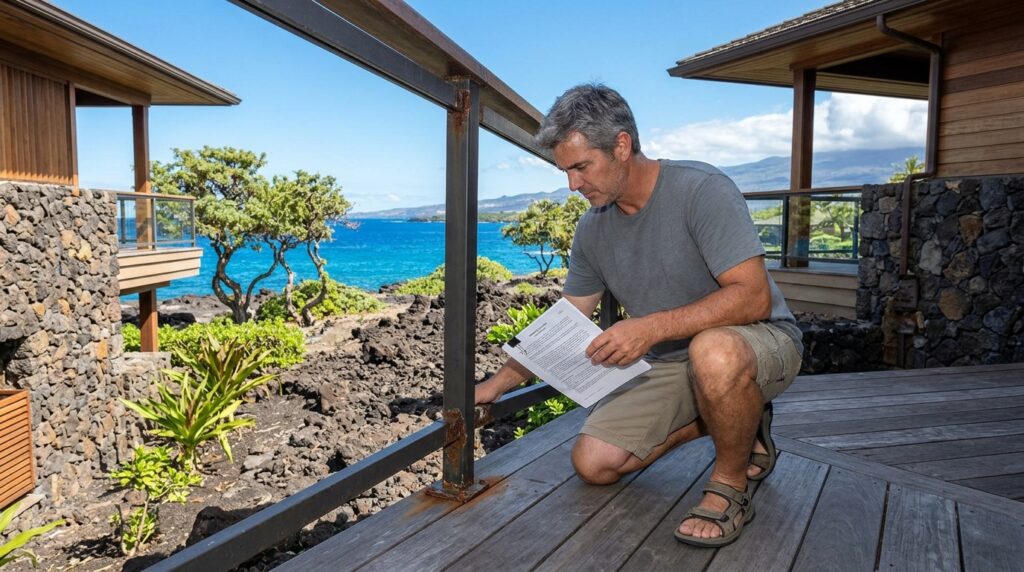
A video walkthrough can show you updated stone countertops and ocean views, but it will never tell you if the building has thirty-year-old cast iron waste lines waiting to fail. When you are buying a Hawaii condo remotely from several thousand miles away, the physical unit is only a small fraction of what you actually purchase. You are buying an undivided interest in a shared commercial structure exposed to constant trade winds, high humidity, and marine air.
The Limits of Virtual Tours and Video Walkthroughs
High-definition video tours and live FaceTime walkthroughs are sales tools, not diagnostic evaluations. A camera lens smooths out wall waviness, skips over signs of spalling concrete on lanai undersides, and ignores the subtle musty odor that indicates past water intrusion behind drywall. Even more critically, a walk through an individual unit shows you nothing about the health of the roof, the status of the cooling towers, or the balance in the association bank account.
Your mainland purchase instincts will tell you to focus on square footage, finish level, and view corridors. In an island condominium environment, your primary financial risk sits outside the four walls of the unit. Getting comfortable with a remote purchase requires examining building-level operational health through written records before your contractual contingencies expire.
Relying on seasoned representation and independent Hawaii property inspections helps uncover physical defects inside the unit, but verifying the condition of the shared structure requires reading the association disclosures with an auditor’s eye.
Deconstructing the HOA Reserve Study and Financial Package
Hawaii state law requires condominium associations to conduct regular reserve studies and maintain capital replacement reserves based on the estimated lifespan of common elements. An association balance sheet showing a million dollars in cash sounds reassuring until you review the capital plan and discover two million dollars in elevator and roofing replacements scheduled for next year.
When analyzing the association document package from afar, focus on the percentage of fully funded reserves rather than raw dollar figures. An association funded below fifty percent represents an active risk for a special assessment. Look closely at the date of the last formal reserve study. If the board has deferred a study for several years during periods of high construction inflation, their cost projections for future projects are likely inaccurate.
|
Financial Document |
Key Indicator to Check |
Warning Sign |
|---|---|---|
|
Reserve Study |
Percent funded ratio and component lifespans |
Funding levels below 50% with major projects due within 3 years |
|
Meeting Minutes (Past 12 Months) |
Discussions of bids, deferred maintenance, or loans |
Unresolved water leaks, spalling mentions, or recurring board disputes |
|
Operating Budget |
Maintenance fee delinquency rates among owners |
Delinquencies exceeding 5% of total annual billings |
|
Insurance Declaration Page |
Master policy deductibles for water, wind, and hurricane |
Per-unit water damage deductibles exceeding $25,000 |
Review the board meeting minutes covering the previous twelve months line by line. Board members frequently discuss upcoming structural repairs, plumbing leaks, and insurance premium spikes months before those items ever appear as formal line items on an annual budget. If the minutes reveal repeated discussions about concrete spalling repairs or roof patching, expect an assessment or a maintenance fee increase in your near future.
Structural and Mechanical Checks for Aging Coastal Buildings
Buildings constructed between the 1960s and 1980s form the backbone of many island condominium corridors. These buildings are reaching an age where primary utility infrastructures require complete replacement. Before committing capital to an older property, you must confirm the status of three specific mechanical components.
First, examine the waste plumbing lines. Original cast iron stacks corrode from the inside out due to humid coastal air and household chemical use. Replacing vertical plumbing stacks across an occupied multi-story complex costs millions of dollars and creates months of living disruption. Determine whether the building has undergone repiping or if the association is currently gathering engineering bids for stack replacement.
Second, investigate concrete spalling. When salt air penetrates porous concrete, the internal steel rebar oxidizes and expands, causing the surrounding concrete to crack and break away. Lanai edges, walkways, and parking structures are especially vulnerable. A clean listing walk-through does not tell you if the exterior envelope requires structural remediation.
Third, verify the service age and modernization status of the elevators. Elevator modernization projects on an island take considerable time due to maritime freight schedules and specialized labor constraints. In single-elevator or two-elevator buildings, an out-of-service cab directly disrupts tenant access and rental operations.
Master Insurance Policies and Deductible Pass-Throughs
Global property insurance markets have tightened dramatically, and coastal condominium associations face steep premium increases and higher deductibles. When buying remotely, the master deed and insurance declaration page demand immediate scrutiny. The headline maintenance fee often shifts because property insurance costs reset annually across coastal zones.
Pay close attention to how the association allocates insurance deductibles. In many island buildings, if a plumbing line fails inside your unit wall and damages three units below you, the association files a claim under its master policy. However, the bylaws often state that the individual unit owner where the failure originated must pay the master policy deductible. When master policy water damage deductibles reach fifty thousand dollars, you need an individual HO-6 insurance policy structured with sufficient loss assessment coverage to absorb that specific liability.
Understanding basic property legalities such as land tenure and ownership types ensures you do not inadvertently purchase into expiring lease structures or encumbered ground leases that complicate insurance and financing.
Building House Rules and Operational Mechanics
Beyond physical structures and balance sheets, daily governance dictates your actual experience as an absentee owner. An owner who intends to ship sports gear, boards, or dive equipment needs to know where those items will live. Many complexes maintain strict prohibitions against storing recreational equipment on lanais, and interior storage lockers may have waitlists spanning years.
Review the parking assignment documents carefully. Some complexes assign parking stalls through unrecorded house rules, meaning the board can reassign your stall location at will, while others convey stalls as deeded limited common elements. If you plan to run an electric vehicle or install a charging unit, ask for the written alteration policy. Many older associations lack the electrical transformer capacity to support private chargers.
For buyers considering long-term or flexible occupancy, carefully review building pet rules and rental floor durations. An association can legally change minimum rental periods from thirty days to six months by an owner vote, altering your long-term plans overnight if the original declaration permits such amendments without unanimous consent.
Executing Remote Due Diligence with Confidence
Purchasing property sight-unseen works when you base your decision on verifiable documentation rather than listing photography. By examining the structural milestones, studying the engineering studies, and reading twelve months of operational history, you eliminate the blind spots that catch unprepared mainland purchasers off guard.
Before releasing your inspection and document review contingencies, ensure your professional team has reviewed all association records directly. A complete grasp of building liabilities, physical systems, and reviewing condominium governing documents protects your capital long after the initial excitement of purchase settles into ownership reality.