
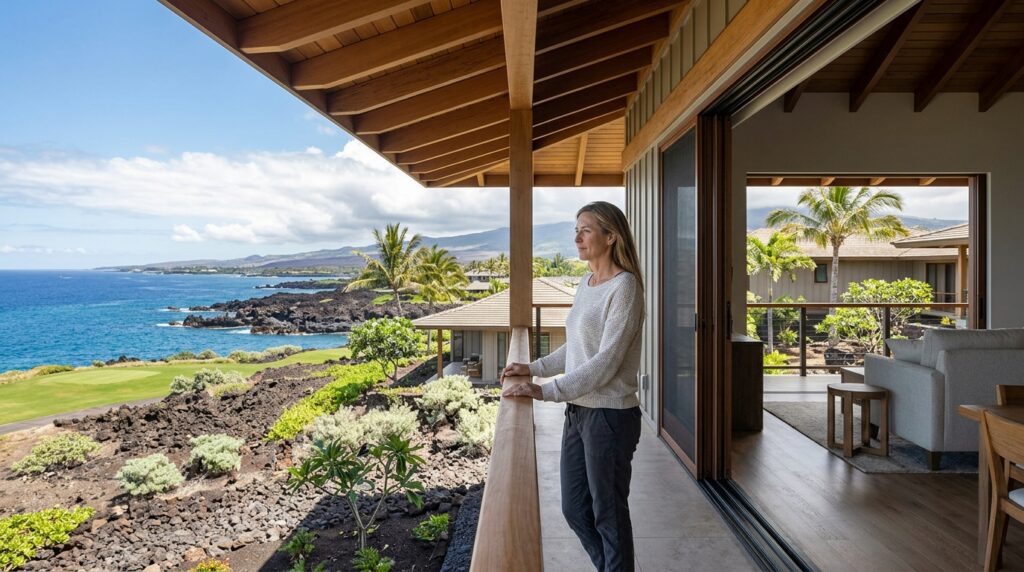
Driving ten minutes up Hualalai Road from downtown Kailua-Kona changes your physical environment faster than almost any drive on the mainland. By the time you reach Mamalahoa Highway and enter the historic coffee village, you have climbed roughly 1,400 feet above sea level. Buyers researching Holualoa real estate often focus on the expansive coastline views and larger parcel sizes, but the shift in elevation alters daily life in ways a listing sheet cannot show.
The Upcountry Microclimate and Daily Temperature Drops
On the coastline along Alii Drive, midday temperatures frequently sit in the upper eighties with intense, direct tropical sun reflecting off black basalt. In Holualoa, the elevation creates a steady drop in temperature of roughly five to eight degrees throughout the day. Evenings are distinctly crisp, often dropping into the low sixties during the winter months, requiring a light sweater or fleece.
This temperature drop completely shifts household energy demands. Along the coast, air conditioning runs constantly for six to eight months of the year, driving up electric bills under some of the highest power rates in the nation. In Holualoa, most custom single-family residences were built without central air conditioning. Louvered windows, deep lanai eaves, and cross breezes moving down the slopes of Hualalai keep interior rooms comfortable through natural airflow.
Buyers looking at homes with solar systems find that their power production serves appliances and water heating rather than constant compressor loads. If you are comparing a hillside property with oceanfront living in Kona, cooling infrastructure represents one of the largest ongoing operational differences between the two environments.
Rainfall Patterns on the Slopes of Hualalai
West Hawaii features an inverted weather pattern compared to the rest of the Hawaiian Islands. While the trade winds bring rain to the east-facing shores of Hilo, the west side is sheltered by Mauna Loa and Hualalai. In Kailua-Kona, mornings begin clear and sunny across the entire coastline.
As the land warms by midday, sea breezes pull moist ocean air up the volcanic slopes. That air cools as it ascends, creating a localized cloud bank around midday across the coffee belt between 1,000 and 2,000 feet of elevation. By mid-afternoon, Holualoa regularly sees soft passing showers, while the beaches three miles below remain bathed in bright sunshine.
These afternoon showers provide the natural irrigation that makes the region famous for coffee farming, citrus, and macadamia nuts. For a homeowner, this means lush, green acreage that does not require thousands of dollars in county water irrigation bills. However, it also means your daily rhythm shifts. Outdoor projects, cycling, and ocean swims happen in the bright morning hours, while afternoons are spent under covered lanais watching rain roll across the canopy.
Shifting Maintenance: Salt Air Versus Moisture
Mainland buyers often assume that all coastal island property faces identical wear and tear. That is a mistake. When you move 1,400 feet up the mountain, you trade salt-air corrosion for moisture management.
Along the ocean, salt spray settles on window tracks, air conditioner coils, exterior light fixtures, and structural fasteners. In Holualoa, you sit high enough above the coastline that airborne salt drops off substantially. Metal finishes last longer, and vehicles parked outside avoid the corrosive coastal patina.
Instead, the higher relative humidity and frequent afternoon rainfall introduce different maintenance priorities. Buyers conducting thorough Hawaii home inspections on upcountry homes should focus on moisture-related items:
-
Gutter clearing: The dense canopy of mango, avocado, and monkeypod trees fills roof valleys and gutters quickly, requiring quarterly clearing to prevent overflow.
-
Roof surfaces: Shingle and metal roofs in damp microclimates can accumulate algae, moss, and lichen, requiring regular soft-washing to maintain material integrity.
-
Wood deck preservation: Ipe, cedar, and composite decking need proper drainage and periodic sealing to resist mildew in shaded mountain pockets.
-
Interior ventilation: Walk-in closets and lower-level storage spaces benefit from passive airflow design or small dehumidifiers during the wetter summer months.
Infrastructure, Zoning, and Acreage in Holualoa Real Estate
The physical layout of properties in Holualoa differs completely from the suburban subdivisions of lower Kailua-Kona. Most residential parcels here sit within agricultural zoning designations, frequently on lots ranging from one to five acres. This zoning provides privacy, distance between neighbors, and agricultural tax rates for owners who maintain active coffee or fruit production.
That acreage also means you are responsible for maintaining your own hillside ground. Slope stability, drainage culverts, and driveway retaining walls are standard components of property ownership on Hualalai. When reviewing what is involved in moving to the Big Island, understanding your parcel infrastructure is essential before making an offer.
Water access varies depending on exact road placement. Most properties along Mamalahoa Highway and established cross streets connect to the Hawaii County Department of Water Supply municipal line. Some higher-elevation or secluded parcels rely on private rainwater catchment tanks. Catchment systems are dependable when sized correctly, but they require filtration maintenance, ultraviolet bulb replacements, and regular tank inspections that municipal connections do not demand.
Evaluating Your Daily Routine Between Town and Mountain
Choosing between a lower-elevation home in town and an upcountry estate in Holualoa comes down to how you spend your waking hours. If your daily schedule revolves around morning surf sessions, ocean paddling, or walking to dinner along Alii Drive, the ten to fifteen-minute drive up and down the mountain can feel like an extra step. If you work remotely, value cooler sleeping temperatures without mechanical cooling, and prefer quiet acreage surrounded by birdsong, the elevation is an immediate upgrade.
When you are weighing whether to purchase a condo or house on the Big Island, location on the mountain drives your long-term satisfaction. Holualoa delivers cooler mountain air, deep green surroundings, and dramatic panoramic ocean views, provided you plan for the rainfall, moisture upkeep, and agricultural land management that come with life at 1,400 feet.